Organics Program

Coming Soon: Organics Diversion Program
The Township is launching an organics diversion program at the new Scotch Line Transfer Station. Further details including launch dates will be posted here as it becomes available.

The following materials are acceptable for the organics program:

  • Vegetable scraps and peels
  • Corn cobs and husks 
  • Fruit cores, pits, peels
  • Meat, poultry, fish, shellfish (including bones)
  • Pasta, bread, grains, cereals, rice, flour
  • Dairy products, eggs (including shells)
  • Nuts, nutshells
  • Baked goods, desserts
  • Coffee grounds, filters, tea bags
  • Butter, margarine, grease, lard (solid)
  • Herbs, spices, and sauces
  • Facial tissue, napkins, paper towels (clean or non-toxic)
  • Muffin paper 
  • Shredded paper (minimal amounts)
  • Wooden toothpicks
  • Pet food
  • Wooden stir sticks/ wooden popsicle sticks 

The following materials are not acceptable for the organics program:

  • Plastic bag liner (non-compostable)
  • Soiled, non-coated/unlined paper plates and bags
  • House plants, including soil
  • Pet waste, bedding, cat litter
  • Diapers
  • Boxboard and cardboard (food-soiled)
  • Flour and sugar bags
  • Kraft paper
  • Microwavable popcorn bags
  • Newspaper (food-soiled)
  • Polycoat containers
  • Incontinence products
  • Hair
  • Nail clippings
  • Birdseed
  • Feathers/fur
  • Sawdust from wood 

Sorting your food waste from your regular household waste is easy! As you create food and organic waste, place it in a compostable bag.

Tips for success

  • Empty your kitchen container regularly.
  • Wrap wet food waste in newspaper or paper towel to reduce odours.
  • Store your food waste in a shaded area when possible.
  • Use only approved compostable liner bags.
  • Store bags of food waste in the freezer until your next visit to the Waste Disposal Site.

Sorting your food waste

Keeping organics free of contamination is one of the most important steps in creating a successful organics program. Proper sorting helps ensure food and organic materials can be processed into valuable compost rather than ending up in landfill.

Why sort your food waste?

Food waste make up a significant portion of household garbage. By separating food and organic waste, residents can:

  • Reduce the amount of garbage sent to landfill.
  • Extend the life of our local landfill.
  • Support the production of compost and other beneficial end products.
  • Help reduce greenhouse gas emissions generated by decomposing waste in landfills.

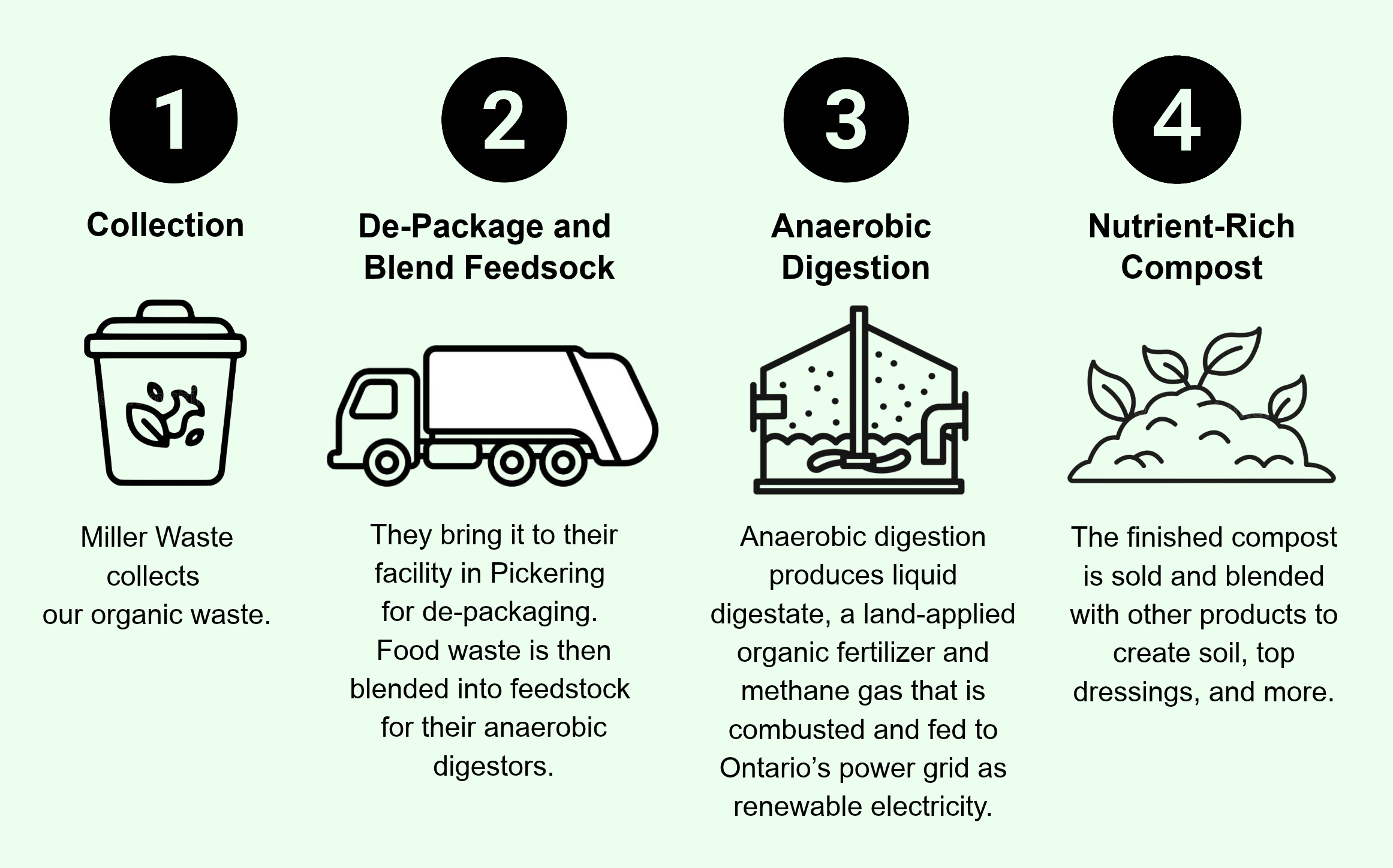
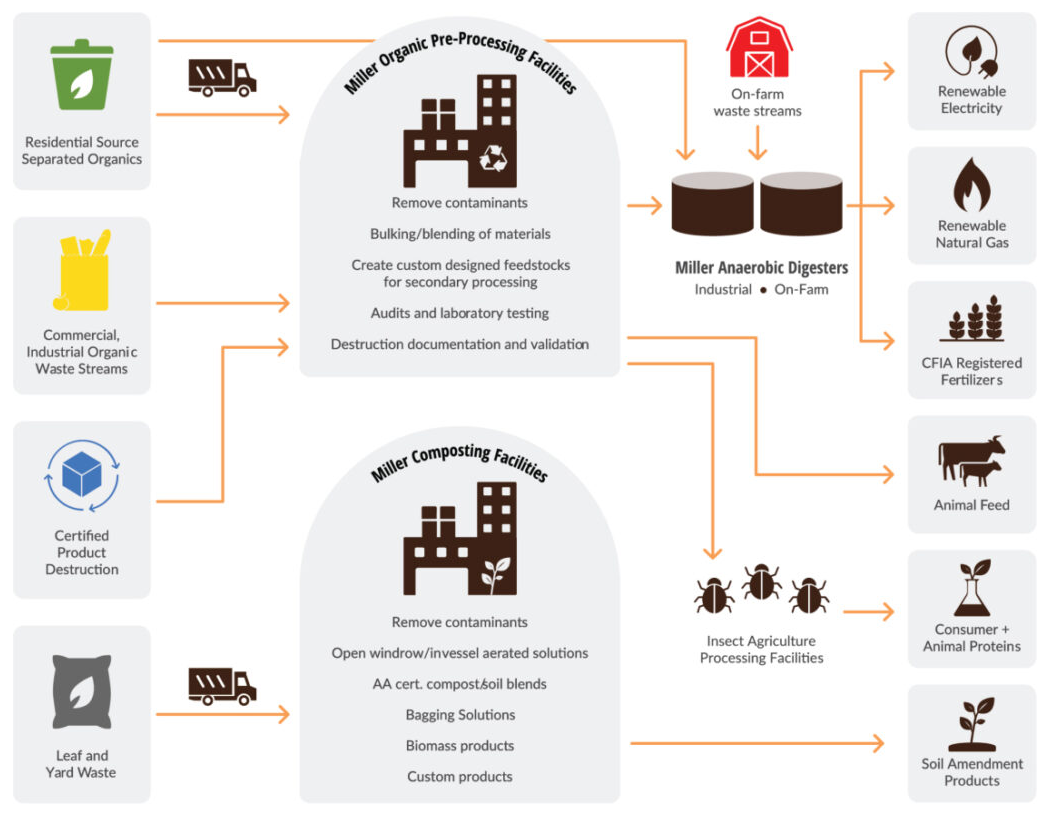
How does the organics process work?

Miller Waste Organic Facility Process Guide:

For more information, visit Miller Waste's Organic Facilities page.

Below you will find frequently asked questions about the program.

What is an Organics Program?

Our Organics Program, also referred to as our Food Waste Program Program, is a new way for residents to dispose of their food and organic waste.

Did you know that 30% or more of household waste is considered organic waste?


Where is the Organics Program being offered?

The Organics Program is currently being offered at the Scotch Line Transfer Station. The Township hopes to evaluate participation and explore future opportunities to expand this program to other Waste Disposal Sites.


Where are my Organics going?

The organic material is taken to a facility for pre-screening to remove contamination and grind the material into a slurry. The slurry is taken to a local anaerobic digestion facility, also known as a biogas facility, to break down organic materials into biogas and digestate. Biogas is used to generate electricity and digestate is applied as a fertilizer to local farm fields.


Is the nutrient-rich soil (digestate) from the Organics Program available for the public to use or pickup?

The digestate is applied as a fertilizer to farm fields. The finished product is not available for the public to pick up.


Can paper or shredded paper go into the Organics Program?

If you have a small amount of shredded paper (a sheet or two) then that is acceptable for the organics bin. Large amounts of shredded paper should be placed in your papers recycling.


What do I do with tissues, napkins, or paper towels?

Tissues, napkins and paper towels are acceptable in the organics program if they are clean or if they’ve been used to clean up water, food mess, or anything that is non-toxic. In the event the tissue, napkins or paper towel are used to clean up any undesirable liquid or bodily fluids, please place them in your garbage bags.


Why is it important to keep organics out of the landfill?

Food and organic waste take up valuable landfill space and create greenhouse gas emissions as they break down.

Sorting organics properly:

  • extends the life of the landfill
  • reduces environmental impacts
  • helps ensure organic materials are processed properly

Even small amounts of organic waste add up quickly across the Township.


Why do we need to make sure there’s still space at the landfill?

Landfills are expensive to build and require large amounts of land.

As the Township grows, more landfill space will be needed. The faster the landfill fills up, the more it may cost taxpayers in the future.

Reducing the amount of waste sent to landfill helps extend its lifespan.

Sign up for Minden Hills News

Stay up to date on the Township's activities, events, programs and operations by subscribing to our News.